
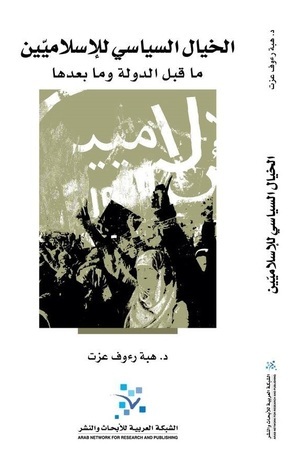
Introduction:
In this thought-provoking work, Dr. Heba Raouf Ezzat tackles the evolution of the “political imagination of Islamists”, focusing particularly on how they conceptualize the Islamic state and the interplay between religion and politics.
The book urges a critical reassessment of traditional frameworks that have long guided Islamist discourse. It aims to cultivate a critical mindset—one that enables a deeper understanding of contemporary realities and a more agile, informed response to them.
Political imagination here refers to the capacity to envision future possibilities beyond rigid or outdated narratives. Dr. Raouf argues that Islamist political thought has been stagnant for nearly a century, and it’s time to liberate it from its conceptual inertia.
Key Themes of the Book:
1. Rethinking the Islamic State Concept:
-
Critique of earlier models: The book critiques past notions of the Islamic state as overly rhetorical and historically romanticized, which has led to confusion in Islamist movements.
-
Call for Renewal: Dr. Raouf advocates for a reevaluation of the modern, nation-state model of the Islamic state, not as a regression, but as a necessary intellectual and moral duty.
-
Reconstructing “Ummah”: Emphasis is placed on rebuilding the concept of the ummah (community of believers) around shared faith, culture, and citizenship rather than centralized statehood.
-
Moving beyond centralism: Overreliance on a singular, centralized state structure has, according to the book, stifled the diversity within Muslim societies.
2. Secularism and Islamic Discourse:
-
Post-secularism challenge: The book examines the shift from classical secularism to post-secularism in the West, arguing that Islamic thought must move beyond this binary.
-
Critique of dominant secularism: Secularism, as portrayed here, aims to privatize religion and subject it to state control. It isn’t just political—it’s epistemological.
-
The relationship between religion and politics: Rather than separating the two, the book emphasizes meaningful dialogue and integration between them.
3. Political Imagination as a Tool:
-
Imagination and change: Political imagination is considered essential for envisioning new frameworks and engaging with complex realities.
-
Breaking linear thinking: A call to move away from overly linear historical narratives and explore alternative intellectual pathways.
-
Role of “myths”: Myths aren’t dismissed but rather redefined as powerful intellectual structures shaping political imagination.
-
Re-reading Islamic history: The book encourages revisiting Islamic history to rekindle creativity and a spirit of ijtihad (independent reasoning).
4. Shifts in Politics and Society:
-
Return of politics: After periods of retreat, Islamist movements are reentering the political space, impacting concepts of public and private life.
-
Expanded public sphere: The public space is now more inclusive, enabling broader participation and ideological diversity.
-
Evolving political self: There’s a focus on how individuals navigate the balance between personal responsibility and collective identity in politics.
-
Roots of violence: The book sees violence not just as ideological but often rooted in socio-economic conditions.
5. The Call for Renewal and Ijtihad:
-
Ijtihad as obligation: Creative problem-solving and adaptation to modern realities are framed as Islamic duties, not optional luxuries.
-
Freeing Islamic discourse: The book advocates for a departure from intellectual subservience and proposes original alternatives to Western modernity.
-
Dialogue over division: The relationship between religion and state should be built on communication, not isolation.
-
Overcoming conceptual stagnation: Renewing political theory requires breaking mental deadlocks and bridging the gap between theory and practice.
-
Renewal’s true purpose: It’s not just change for its own sake, but a return to a dynamic tradition that marries authenticity with relevance.
6. Addressed Issues:
-
The state as a tool: The state is framed as a human-made instrument that can serve the public or become a tool of oppression.
-
Post-Islamism and post-secularism: These emerging paradigms are explored for their influence on contemporary Islamist movements.
-
Copts and interfaith dialogue: The book advocates for inclusive, non-sectarian dialogue on issues such as Christian-Muslim relations in Egypt.
-
Women’s issues: Emphasizes intellectual independence and warns against media-driven framing of women’s rights.
-
Islamic penal system: Advocates modernizing criminal justice in alignment with Islamic ethics and contemporary realities.
Conclusions and Recommendations:
Dr. Raouf calls for a transformative shift in Islamic political thinking, one that:
-
Undertakes in-depth critical reflection, particularly regarding the concept of the Islamic state.
-
Free Islamic thought from ideological dependency.
-
Prioritizes shared human values, including justice, freedom, and citizenship.
-
Learns from global experiences without blindly copying them.
-
Builds a holistic vision to navigate modern challenges.
Highlighted Quotes:
-
“The crisis in Islamist political imagination lies in neglecting conceptual renewal. Important issues were left untouched while debates turned stale. Renewal demands new approaches that match the transformations of our reality.”
-
“This book does not aim to criticize Islamist thought by comparing it to liberal democracy or by scoring ideological points. The objective is understanding and conceptual analysis—not praise or condemnation.”